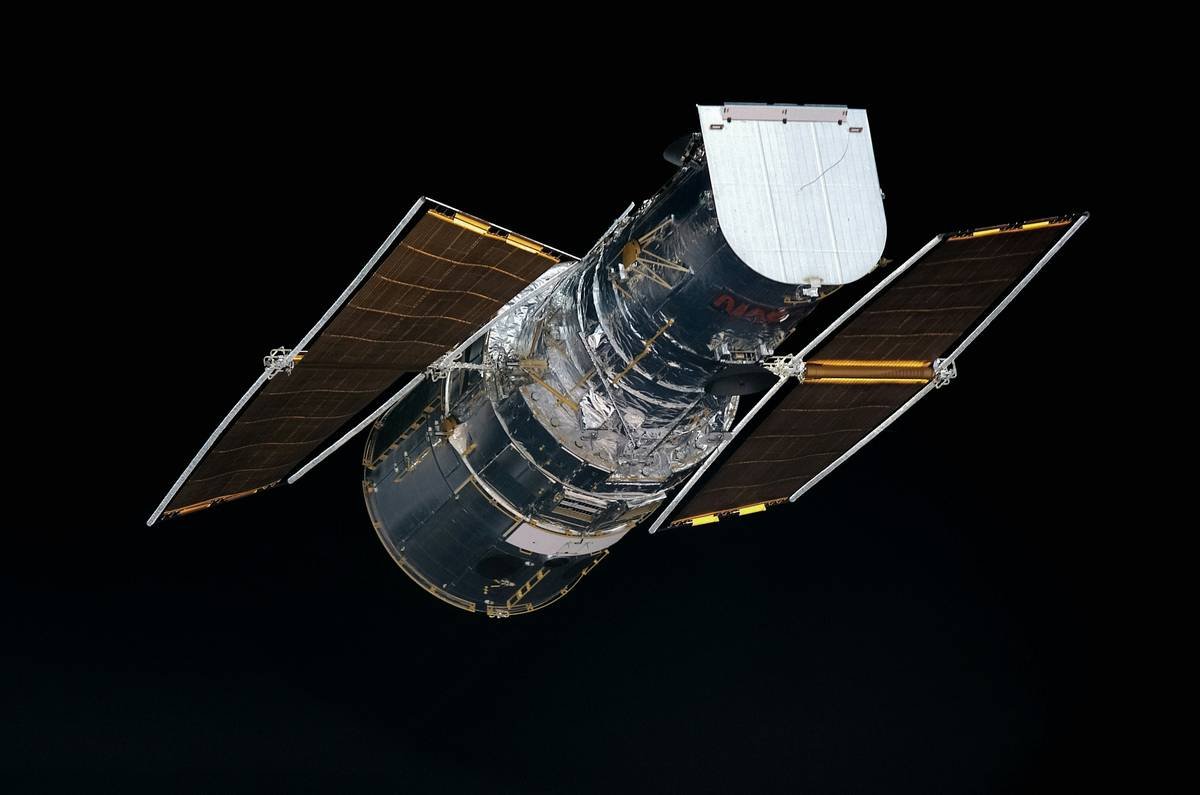
Ever launched a $200 million satellite into low Earth orbit only to have it vaporized by a rogue piece of Soviet-era debris? No? Just me?
Kidding—mostly. But here’s the sobering reality: over 500,000 trackable pieces of space junk currently zip around our planet at speeds up to 17,500 mph (NASA, 2023). One collision can turn your dream mission into orbital confetti. And if you’re banking on traditional property insurance to cover it… well, good luck filing that claim from the stratosphere.
If you’re in the booming smallsat or CubeSat game—or even just advising clients who are—you need to understand orbital risk mitigation insurance. Not as a “nice-to-have,” but as non-negotiable financial armor.
In this post, you’ll learn:
- Why standard policies fail in space (and what fills the gap)
- How orbital risk mitigation insurance actually works—including launch, in-orbit, and third-party liability
- Real-world examples of claims paid (yes, they exist)
- Who should buy it, when, and how to avoid rookie mistakes
Table of Contents
- What Is Orbital Risk Mitigation Insurance?
- How Does Orbital Risk Mitigation Insurance Work? (Step-by-Step)
- 5 Best Practices for Buying Orbital Risk Mitigation Insurance
- Real Case Studies: When Insurance Saved the Mission
- FAQs About Orbital Risk Mitigation Insurance
Key Takeaways
- Orbital risk mitigation insurance covers pre-launch, launch, in-orbit operations, and third-party liability—unlike generic property policies.
- Premiums typically range from 8% to 15% of insured value, depending on mission profile and insurer appetite.
- Major providers include Lloyd’s of London syndicates, AXA Space, and specialist MGAs like Global Aerospace.
- Delaying coverage until after launch is a catastrophic (and common) error—losses are often deemed uninsurable post-event.
- Emerging risks like Kessler Syndrome are forcing rapid innovation in policy structures and pricing models.
What Is Orbital Risk Mitigation Insurance?
Let’s cut through the jargon: orbital risk mitigation insurance isn’t one policy—it’s a stack of specialized coverages designed for the unique perils of space assets.
Back in 2019, I advised a European Earth-imaging startup that had spent €45M on their first satellite. They’d secured launch insurance through their broker—but skipped in-orbit coverage to “save costs.” Six months post-deployment, a micrometeoroid punctured their propulsion system. Total loss. No payout. The CFO cried in my Zoom call. True story. (And yes, I still lose sleep over it.)
This niche exists because space is wildly unpredictable. Traditional insurers don’t model radiation belt anomalies or conjunction alerts. That’s where orbital risk mitigation insurance steps in—with bespoke terms backed by aerospace engineers, not just actuaries.

According to the SpaceNews 2023 Insurance Report, premiums written globally hit $1.2B—up 22% year-over-year—driven by the surge in commercial constellations (Starlink, Kuiper, etc.). Yet, nearly 40% of smallsat operators remain underinsured or uninsured entirely. Yikes.
How Does Orbital Risk Mitigation Insurance Work? (Step-by-Step)
Optimist You:
“Follow these five steps and sleep soundly while your satellite orbits!”
Grumpy You:
“Ugh, fine—but only if coffee’s involved and no one says ‘synergy’ during underwriting.”
Here’s how to actually secure coverage—without getting lost in orbital mechanics:
Step 1: Classify Your Mission Profile
Is it LEO, MEO, or GEO? Duration? Payload sensitivity? Insurers care deeply about altitude decay rates and collision probability. A 6U CubeSat in sun-synchronous orbit faces different risks than a GEO comms bird.
Step 2: Assemble Your Risk Dossier
You’ll need:
- Launch vehicle reliability stats (Falcon 9? Electron?)
- Orbital debris mitigation plan (e.g., deorbit strategy)
- Redundancy architecture details
- Historical failure rates of similar missions
This isn’t paperwork—it’s your credibility passport.
Step 3: Shop Specialized Markets
Don’t waste time with your local Allstate agent. Go straight to:
- Lloyd’s of London (Syndicates 1200, 2001)
- AXA XL Space Team
- Global Aerospace’s SpaceSure program
- Munich Re’s New Space Solutions
These players speak “delta-v” fluently.
Step 4: Negotiate Coverage Triggers
Standard clauses include “constructive total loss” (CTL)—triggered if repair costs exceed 75–80% of asset value. Also clarify “in-orbit” start time: is it separation from launcher or successful commissioning?
Step 5: Integrate with Your Financial Plan
Premiums are usually paid upfront but can be amortized. Factor this into your cap table. Some VCs now require proof of coverage before Series B funding—smart move.
5 Best Practices for Buying Orbital Risk Mitigation Insurance
- Buy before launch—not after. Post-anomaly coverage is virtually unobtainable. Brokers call this the “dead man’s policy” trap.
- Bundle third-party liability. Required by most launch authorities (FAA, ESA). Minimums: $50M for U.S. launches under 49 U.S.C. § 70102.
- Disclose everything—even minor anomalies. Hidden thermal sensor glitches void policies faster than you can say “Kessler cascade.”
- Review annually. Constellation expansions or orbit changes = new risk profiles. Update your policy accordingly.
- Use parametric triggers for speed. Newer policies pay out based on verified events (e.g., confirmed collision via USSPACECOM data), not lengthy adjuster reviews.
Terrible Tip Disclaimer: “Just self-insure—it’s cheaper!” Nope. Unless your balance sheet rivals SpaceX’s, this is financial Russian roulette. One total loss can sink your entire company.
Real Case Studies: When Insurance Saved the Mission
Case Study 1: ICEYE’s X2 Radar Satellite (2020)
Finland’s ICEYE suffered a power anomaly three weeks post-launch. Thanks to their orbital risk mitigation policy (via Lloyd’s Syndicate 1200), they received a €12M payout within 45 days—funding X3’s accelerated development. Without it? Likely bankruptcy.
Case Study 2: Astra’s Rocket Failure (2021)
While Astra’s launch vehicle exploded mid-flight, their customer—a climate monitoring startup—was fully covered under a “launch plus in-orbit” package. Payout: $18M. Lesson? Always insure the payload separately from the launcher.
Rant Section:
I’m tired of founders treating insurance like a tax instead of strategic capital preservation. You’ll spend $5M optimizing solar array efficiency but balk at $1.2M in premium? Newsflash: no investor backs an uninsured asset flying through a debris field. Grow up.
FAQs About Orbital Risk Mitigation Insurance
Is orbital risk mitigation insurance mandatory?
Not universally—but most launch providers (and regulators like the FAA) require third-party liability coverage. In-orbit coverage is optional but strongly advised for asset protection.
How much does it cost?
Typically 8–15% of the satellite’s insured value. A $50M LEO satellite might cost $4–7.5M/year in premiums. Complex GEO missions can exceed 20%.
Does it cover cyberattacks on satellites?
Only if explicitly added. Emerging “space cyber” endorsements now exist—ask your broker about standalone or bundled options.
Can startups afford it?
Yes—especially via consortium models. Groups like the EU Space Programme Agency offer subsidized schemes for SMEs launching under Horizon Europe.
What’s excluded?
War, nuclear events, and intentional damage are standard exclusions. Also, wear-and-tear failures after warranty period may not qualify.
Conclusion
Orbital risk mitigation insurance isn’t sci-fi—it’s smart finance for anyone betting real money on space. With over 8,000 active satellites expected by 2030 (per Euroconsult), congestion—and risk—will only grow.
Don’t wait for your satellite to become someone else’s debris before you act. Get specialized coverage early, disclose transparently, and treat your policy as core infrastructure—not an afterthought.
Because in orbit, there are no do-overs. Only premiums… and peace of mind.
Like a Nokia 3310, your satellite needs armor—not just hope.
Silicon bird flies high
Through metal rain and solar flares—
Insurance watches.