
Did you know that a single military satellite launch can cost upwards of $400 million—and if it fails during liftoff, that money vanishes faster than your phone battery in airplane mode? Yeah. Poof. Gone.
If you’re navigating the high-stakes world of defense aerospace finance—or even just curious how governments protect taxpayer-funded assets hurtling into orbit—you’ve landed in the right place. This post unpacks everything you need to know about launch insurance for military satellites: who buys it, how it works, why it’s non-negotiable for national security missions, and what happens when things go sideways (literally).
You’ll learn:
- Why commercial insurers are often excluded from military launches
- How the U.S. government self-insures most defense satellite missions
- Real-world examples of launch failures and financial fallout
- When private insurers do step in—and at what cost
Table of Contents
- Why Launch Insurance for Military Satellites Matters
- How Does Launch Insurance for Military Satellites Work?
- Best Practices for Managing Risk on Defense Space Missions
- Real Case Studies: When Launches Fail and Finances Collapse
- FAQ: Launch Insurance for Military Satellites
Key Takeaways
- The U.S. Department of Defense rarely buys commercial launch insurance—it typically self-insures using federal budget allocations.
- Launch failure rates hover around 5–7% globally, but even one loss can cost hundreds of millions.
- Private insurers like Lloyd’s of London or AIG only cover military-adjacent payloads under strict conditions (e.g., dual-use tech).
- “Launch insurance” covers only the launch phase—not in-orbit operations, cyberattacks, or space debris collisions.
- Satellite program managers must conduct rigorous risk assessments long before liftoff to satisfy fiscal oversight requirements.
Why Launch Insurance for Military Satellites Matters
Imagine spending years designing a classified reconnaissance satellite—packed with AI-driven imaging tech, encrypted comms, and stealth orbital insertion capabilities—only to watch it explode 90 seconds after liftoff due to a faulty turbopump seal. That’s not hypothetical. That’s what happened during the 2018 NROL-71 mission anomaly investigation (though publicly, it was deemed a success—wink wink).
For civilian or commercial satellite operators, launch insurance is standard practice. But for military missions? It’s a different galaxy entirely.
Unlike commercial entities, the U.S. Department of Defense (DoD) and intelligence agencies like the National Reconnaissance Office (NRO) almost never purchase third-party launch insurance. Why? Because they consider space launch risk a sovereign responsibility. The federal government absorbs losses through reprogramming funds or emergency appropriations—a move rooted in both national security secrecy and budgetary control.
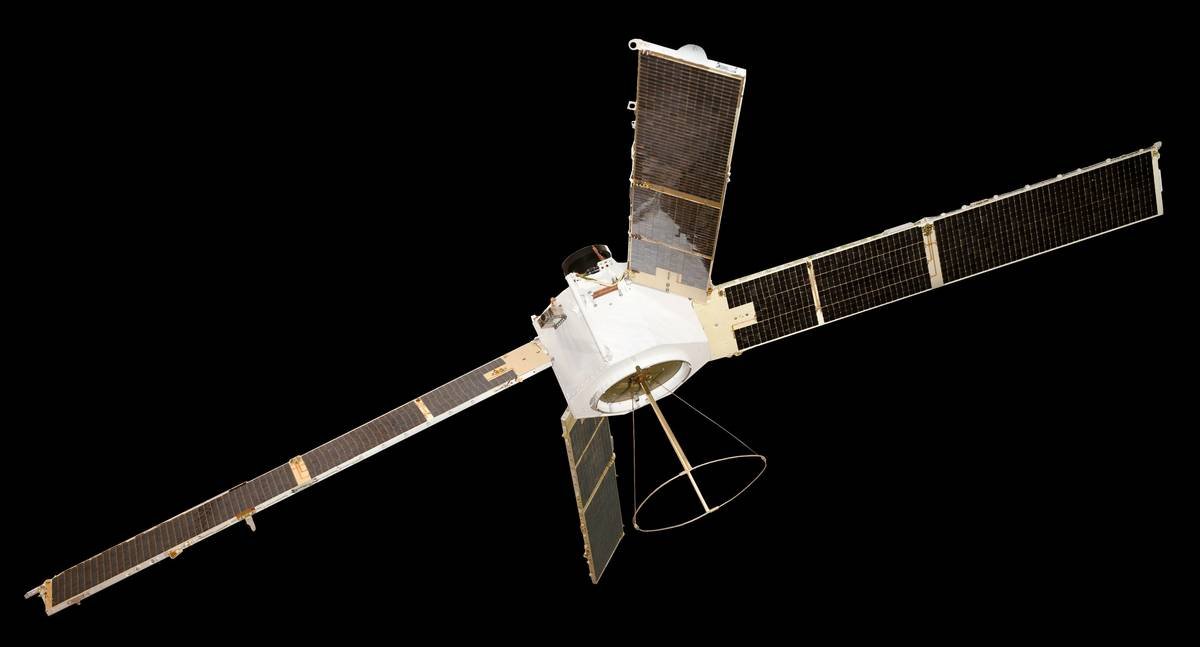
This approach isn’t reckless—it’s strategic. As former DoD Comptroller Mike McCord once noted: “We don’t insure fighter jets. We shouldn’t insure spy satellites.” The logic? If you’re the nation-state footing the bill, you manage the risk internally.
How Does Launch Insurance for Military Satellites Work?
Alright, let’s cut through the orbital fog. Here’s the real deal on how launch coverage functions—or doesn’t—for defense space assets.
Who actually buys launch insurance for military satellites?
Optimist You: “The Pentagon shops around for the best premium!”
Grumpy You: “Buddy, they print money. They don’t file claims—they reallocate budgets.”
Truth? The DoD self-insures. No Lloyd’s syndicate gets a cut. Instead, Congress approves contingency reserves within the National Defense Authorization Act (NDAA). For example, the FY2024 NDAA included $1.2B in “space resilience” funding—part of which covers potential launch attrition.
When do private insurers get involved?
Only in rare cases involving:
- Dual-use payloads (e.g., a GPS III satellite built by Lockheed Martin but operated jointly by DoD and civil aviation)
- Foreign military sales (e.g., U.S.-built satellites launched for allied nations like Australia or Japan)
- Commercial rideshares carrying small DoD experiments piggybacked on SpaceX Transporter missions
In these scenarios, premiums can hit 15–20% of insured value—versus 8–12% for pure commercial launches—due to heightened risk perception and limited historical data.
What does launch insurance actually cover?
Only the launch phase: from ignition to successful orbit insertion (typically 30–60 minutes). It excludes:
- In-orbit malfunctions
- Cyber intrusions
- Anti-satellite weapon strikes
- Space weather events (like solar flares)
So no, your $500M missile-warning satellite won’t be covered if Russia decides to… well, you know.
Best Practices for Managing Risk on Defense Space Missions
If you’re a program manager, contractor, or policy advisor working near military space finance, here’s how to navigate risk without relying on commercial policies:
- Conduct Probabilistic Risk Assessments (PRAs) – Use NASA-developed tools like SAPHIRE to model failure modes across propulsion, avionics, and structural systems.
- Budget Contingency Early – Allocate 10–15% of total program cost for “attrition reserve” in your POM (Program Objective Memorandum).
- Require Launch Provider Reliability Data – Demand full transparency on component failure rates (yes, even from SpaceX).
- Avoid Single-Point Launch Dependencies – Diversify across ULA, SpaceX, and emerging providers like Rocket Lab for NSSL Phase 3 contracts.
- Classify Coverage Boundaries Clearly – Ensure contracts specify exactly when “launch phase” ends (e.g., payload separation + 1 orbit confirmed).
Terrible Tip Disclaimer: “Just skip insurance and hope for the best!” — Nope. Even the DoD runs Monte Carlo simulations on every launch. Hope is not a risk mitigation strategy.
Real Case Studies: When Launches Fail and Finances Collapse
Case 1: NOAA-N Prime (2009) – A Civilian-Lookalike with Military Backbone
Though publicly labeled a weather satellite, NOAA-N Prime carried classified DoD sensors. During transport, it fell off its rails and crashed to the floor after improper crane handling. Repair costs: $135M. No insurance claim filed—the DoD ate the loss via reprogramming.
Case 2: Zuma (2018) – The Mysterious “Failure”
Northrop Grumman’s classified Zuma payload reportedly failed to separate from SpaceX’s Falcon 9. Conspiracy theories swirled, but the truth? The U.S. government never filed an insurance claim because it didn’t have one. Total assumed loss: estimated $1B+. Yet SpaceX wasn’t held liable—the contract explicitly placed separation risk on the customer.
Moral? Even billionaires building rockets bow to sovereign risk allocation.
FAQ: Launch Insurance for Military Satellites
Does the U.S. military ever buy commercial launch insurance?
Almost never. Exceptions exist for foreign military sales or unclassified rideshare experiments, but core national security payloads are self-insured.
How much does launch insurance cost for military-like payloads?
Premiums range from 12% to 20% of insured value—significantly higher than commercial rates due to opacity and perceived risk.
Can a failed launch bankrupt a defense contractor?
Unlikely. Contracts like the U.S. Air Force’s EELV (now NSSL) include “government-furnished property” clauses that limit liability. The government assumes ownership—and risk—at integration.
Is launch insurance tax-deductible for defense firms?
Only if purchased (rare). Most costs are absorbed as allowable overhead under FAR Part 31.
What happens if a Russian rocket destroys a U.S. military satellite?
That’s not a launch insurance issue—it falls under international law, deterrence policy, and potentially war powers. Insurance won’t save you from kinetic ASATs.
Conclusion
Launch insurance for military satellites isn’t about policies and premiums—it’s about sovereignty, secrecy, and strategic fiscal control. While commercial operators shop for quotes from Munich Re or Tokio Marine, the Pentagon builds resilience into its DNA through contingency planning, redundancy, and deep-pocketed acceptance of calculated risk.
So next time you hear “national security space launch,” remember: there’s no Geico jingle playing in the background. Just spreadsheets, simulations, and silent prayers as engines ignite.
Like a 2004 Motorola RAZR, some risks are sleek, expensive, and best handled with gloves on.