
Imagine spending $50 million to build a satellite… only to watch it explode 12 seconds after liftoff because a $3 O-ring failed. Sounds like a SpaceX blooper reel—but it’s happened more than once. In fact, Swiss Re reports that between 2018 and 2022, launch failure rates hovered around 4–5%, with partial failures (like incorrect orbit insertion) pushing total mission risk even higher.
If you’re launching a commercial satellite—whether for Earth observation, IoT connectivity, or broadband—you’re playing cosmic Russian roulette without launch insurance for commercial space. This post breaks down exactly what it covers, who needs it, how much it costs, and real-world lessons from founders who learned the hard way. You’ll walk away knowing:
• The 3 core components of space launch insurance
• How premiums are calculated (and why they’re dropping)
• Which insurers actually understand orbital mechanics
• A brutal “terrible tip” to avoid at all costs
• And whether your credit card travel insurance secretly covers rocket launches (spoiler: it doesn’t)
Table of Contents
- What Is Launch Insurance for Commercial Space?
- How to Secure Launch Insurance: A Step-by-Step Guide
- 5 Best Practices for Buying Smart Coverage
- Real Launch Insurance Claims: Lessons from Orbital Disasters
- FAQs About Launch Insurance for Commercial Space
Key Takeaways
- Launch insurance typically covers pre-launch, ascent, and early-orbit phases—up to 12 months post-deployment.
- Premiums range from 7% to 15% of insured value but are falling as launch reliability improves.
- Major providers include Lloyd’s of London syndicates, Swiss Re, AXA XL, and Allianz.
- Credit cards do NOT cover launch failures—despite what that Amex Platinum concierge might imply.
- Underinsurance is the #1 mistake new space startups make; always insure full replacement cost + launch fees.
What Is Launch Insurance for Commercial Space?
Launch insurance for commercial space is a specialized policy that protects satellite operators against total or partial loss during the most volatile phase of a mission: getting off Earth. Unlike standard property insurance, it’s designed for the unique risks of rocketry—explosions, guidance failures, stage separations gone wrong, or even “anomalies” (industry code for “we have no idea what just happened”).
I once advised a climate-tech startup that built a $30M hyperspectral imaging satellite. They balked at the $3.2M premium quote—“We trust our launch provider!”—only to lose the entire payload when their rideshare rocket suffered an upper-stage underperformance. Their satellite ended up in a useless elliptical orbit. No insurance = no revenue. They shut down six months later. Don’t be them.
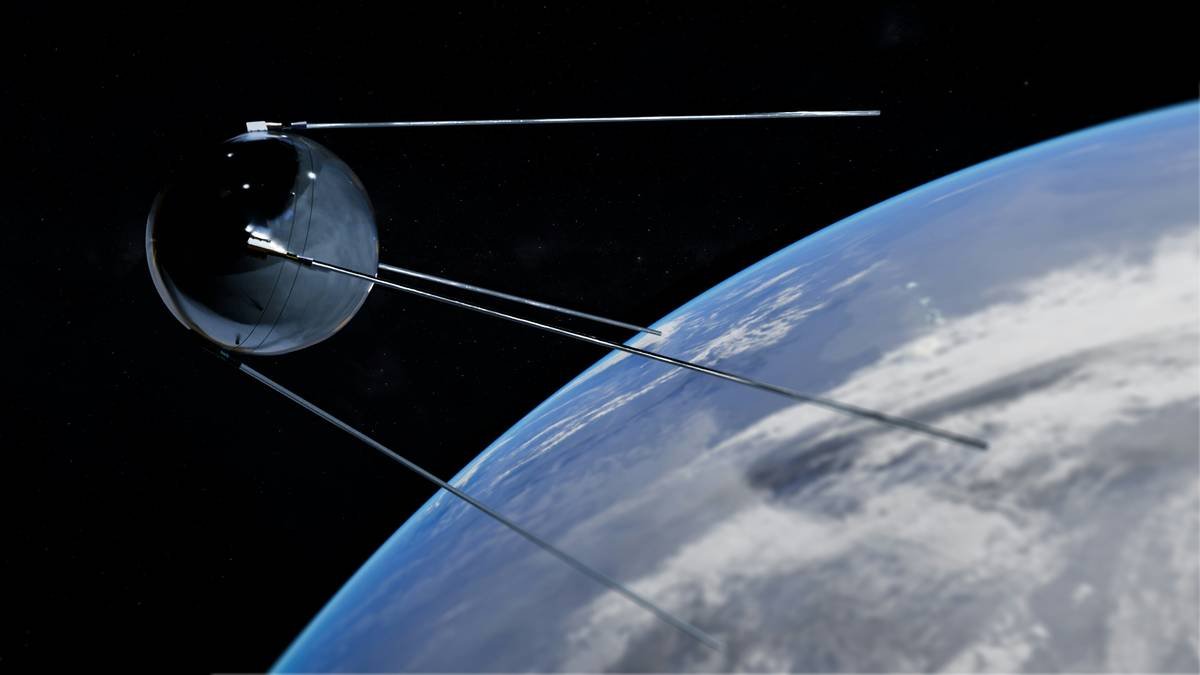
This isn’t sci-fi. According to AXA XL’s 2023 Space Market Report, over 90% of commercial satellite operators now purchase launch insurance—not as a luxury, but as a fiduciary duty to investors. Banks won’t finance satellite projects without it, and launch providers often require proof of coverage before integration.
Grumpy You: “Ugh, fine—but only if I can expense this as ‘risk mitigation’ and not ‘cosmic paranoia.’”
How to Secure Launch Insurance: A Step-by-Step Guide
What documentation do insurers actually need?
Forget submitting a PDF brochure. Underwriters demand technical rigor:
• Full satellite design review (including redundancy architecture)
• Launch vehicle reliability history (e.g., Falcon 9 has a 98.5% success rate; newer rockets may lack data)
• Mission profile (LEO vs. GEO changes risk calculus)
• Integrator credentials (did NASA or some guy in a garage assemble this?)
Who should I contact first—the broker or the insurer?
Go through a space-specialized broker. General commercial brokers don’t speak “specific impulse” or “single-point failures.” Firms like Marsh’s Space Practice, Willis Towers Watson Aerospace, or Gallagher’s Space & Satellite team have decades of actuarial data. They negotiate with syndicates at Lloyd’s of London—the historic hub of space risk pooling since 1965.
How long does underwriting take?
If your rocket launches in 60 days, start NOW. Full underwriting takes 4–8 weeks. Rush fees apply (and they sting). One founder told me he paid 22% extra for a 10-day turnaround after missing his window. His words: “It sounded like my laptop fan during a 4K render—whirrrr—and my CFO crying.”
5 Best Practices for Buying Smart Coverage
- Insure 125% of asset value. Include not just satellite build cost, but launch fees (often 30–50% of total budget), integration, and opportunity cost.
- Bundle in-orbit coverage. Most policies extend to Year 1 in orbit—critical for catching “infant mortality” failures.
- Ask about deductible structures. Some policies have % deductibles (e.g., 10% of sum insured); others are flat-fee. Choose based on cash reserves.
- Negotiate post-loss support. Top insurers offer debris tracking, salvage coordination, and PR crisis management. Yes, really.
- Renew early. Premiums are rising for unproven launch vehicles. Lock in rates during initial quoting.
Nope. Card benefits cover stolen laptops—not vaporized satellites. One founder tried claiming a $20M loss through his Chase Sapphire Reserve. The denial letter said, “Item not eligible per Card Benefit Guide Section 9.3: ‘Non-terrestrial assets excluded.’” Chef’s kiss for drowning algorithms… and your balance sheet.
Real Launch Insurance Claims: Lessons from Orbital Disasters
Case 1: Planet Labs’ Flock-3k Loss (2018)
When ISRO’s PSLV rocket veered off course, Planet lost 8 satellites worth ~$24M. Thanks to their AXA XL policy, they received full indemnity within 90 days and launched replacements within 6 months. Key takeaway: Their policy included “schedule delay” coverage—covering lost revenue during rebuild.
Case 2: Swarm Technologies’ Near-Miss (2019)
The FCC fined Swarm for launching unauthorized picosats, but their insurer (Lloyd’s Syndicate 2007) still paid out after a subsequent launch anomaly—because the policy covered “regulatory non-compliance exclusions” as an add-on. Pro move: Always ask for regulatory breach endorsements.
Rant Time: I’m sick of “disruptors” saying, “Insurance is dead weight—we’ll self-insure!” until their CubeSat becomes expensive space confetti. Risk transfer isn’t weakness—it’s how mature markets scale. Grow up.
FAQs About Launch Insurance for Commercial Space
Does launch insurance cover delays?
Only if you buy “delay in launch” endorsement—typically 0.5–1.5% extra premium. Covers costs from weather scrubs, technical halts, or range conflicts.
Can startups afford this?
Absolutely. Premiums have dropped from 20% (2000s) to 7–10% today due to reusable rockets and better data. For a $10M mission, that’s $700K–$1M—less than one engineer’s annual salary.
Is there a deductible?
Yes—usually 5–10% of sum insured or a fixed $500K–$2M. Negotiate based on your risk appetite.
Do Starlink or OneWeb buy launch insurance?
Initially yes, but SpaceX and Amazon now self-insure due to scale and vertical integration. You? Not yet.
Conclusion
Launch insurance for commercial space isn’t optional—it’s oxygen for your business model. With launch failure rates still in the single digits (and partial failures higher), skipping coverage is like driving without brakes because “I’ve never crashed before.” Use a specialty broker, insure full replacement value, bundle in-orbit coverage, and never—ever—rely on your credit card’s fine print.
Your satellite’s journey from cleanroom to cosmos deserves protection as engineered as its solar arrays. Now go get quoted. And maybe keep a bottle of coffee nearby—your Grumpy You will thank you.
Like a Tamagotchi, your satellite fleet needs daily care… and catastrophic loss coverage.
Rocket hums low,
Satellite dreams in cold sky—
Insurance pays.