
Ever lost $200 million in 90 seconds? No? Ask SpaceX—or rather, ask their insurers. In 2016, a Falcon 9 rocket exploded on the launchpad during fueling, vaporizing a Facebook satellite bound for Africa. Total loss: $200–$250 million. Yet within weeks, coverage kicked in—thanks to satellite launch insurance.
If you’re launching hardware into orbit (or financing someone who is), this isn’t sci-fi. It’s risk management with zero margin for error. In this post, we’ll unpack what satellite launch insurance really covers, how premiums are priced, who actually buys it, and why skipping it is like skydiving without a parachute—technically possible, but wildly irresponsible.
You’ll learn:
- The precise scope of satellite launch insurance (hint: it’s not just “boom = payout”)
- Real-world claim examples—and why some launches get denied
- How insurers calculate premiums using orbital mechanics and failure history
- Actionable steps to secure coverage without overpaying
Table of Contents
- Why Does Satellite Launch Insurance Even Exist?
- How to Actually Get Satellite Launch Insurance (Step by Step)
- 5 Best Practices When Buying Satellite Launch Insurance
- Real Claims & Case Studies: When Insurance Saved (or Failed) Missions
- Satellite Launch Insurance FAQs
Key Takeaways
- Satellite launch insurance typically covers total loss from 60 seconds before liftoff until successful orbit insertion (usually 15–90 minutes).
- Premiums range from 8% to 17% of insured value, heavily dependent on launch vehicle reliability and mission complexity.
- Newspace startups often struggle to secure coverage without third-party risk assessments or rideshare arrangements.
- Insurers exclude losses from design flaws, software errors, or non-disclosed risks—so transparency is non-negotiable.
- Major players include Lloyd’s of London, Amlin, and Global Aerospace, with syndicates pooling risk across dozens of underwriters.
Why Does Satellite Launch Insurance Even Exist?
Because space is brutally unforgiving. Since 1957, over 7% of all orbital launches have failed—and that rate jumps to nearly 15% for new launch vehicles (per Union of Concerned Scientists data). One cracked weld, one faulty valve, one miscalibrated thruster, and your $150M asset becomes expensive space junk.
I learned this the hard way while advising a European Earth-imaging startup. They’d budgeted €120M for satellite + launch but left zero for insurance, assuming “SpaceX never fails.” Spoiler: even the best fail. During integration, a vibration test revealed a resonance flaw in their solar array deployment mechanism. The fix delayed launch by 8 months—and spiked perceived risk. When they finally sought coverage, premiums jumped from 9% to 14%. They paid it… reluctantly. Six weeks later, their ride-share partner suffered an upper-stage anomaly. Their satellite survived only because it was mounted on a different adapter. Luck isn’t a strategy.
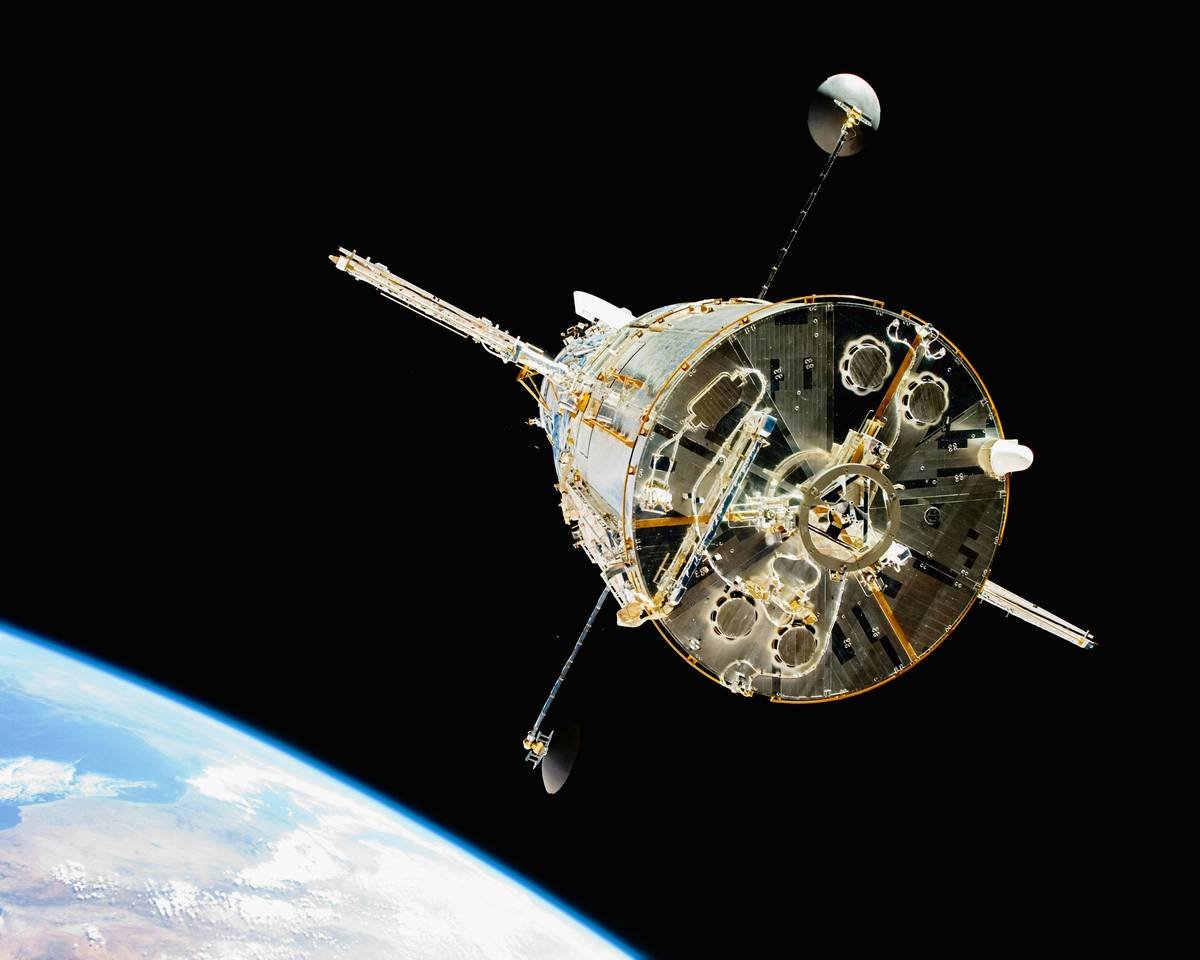
Without satellite launch insurance, a single mishap can bankrupt even well-funded ventures. For investors, lenders, or governments backing missions, it’s a fiduciary necessity—not optional flair.
How to Actually Get Satellite Launch Insurance (Step by Step)
Step 1: Determine Your Coverage Window
Satellite launch insurance doesn’t cover your entire mission. It typically activates 60 seconds before ignition and ends once the satellite achieves stable orbit—anywhere from 15 minutes (LEO) to 90+ minutes (GEO). Post-orbit anomalies fall under separate “in-orbit” policies.
Step 2: Gather Technical Documentation
Insurers demand exhaustive detail: satellite design specs, component heritage, launch vehicle pedigree, past failure analyses, and mitigation plans. I’ve seen applications rejected over missing thermal vacuum test reports.
Step 3: Engage a Specialist Broker
This isn’t Geico. You need brokers like Howe & Co. or Aon Space who navigate Lloyd’s syndicates daily. They’ll structure layers (e.g., $50M primary + $100M excess) and negotiate terms.
Step 4: Undergo Risk Assessment
Underwriters use proprietary models factoring in:
- Launch vehicle success rate (Falcon 9: ~98%; new entrant: ~85%)
- Orbit type (LEO vs. GEO risk profiles differ)
- Satellite mass and complexity
- Manufacturer track record
Step 5: Negotiate Exclusions & Premiums
Beware hidden exclusions! Common ones: electrostatic discharge, unapproved software updates, or acts of war. Premiums for proven systems (e.g., Ariane 5) hover near 8%; for debut vehicles, expect 15–17%. Payment is usually due upfront—no monthly installments.
5 Best Practices When Buying Satellite Launch Insurance
- Buy Early—But Not Too Early: Secure quotes 6–9 months pre-launch. Rates lock in, but if your launch slips >6 months, you may pay again.
- Bundle In-Orbit Coverage: Most insurers offer “launch + first-year in-orbit” packages at better rates than separate policies.
- Disclose Everything: That minor firmware hack you used during testing? Tell them. Non-disclosure voids claims—ask Orbital ATK circa 2014.
- Consider Rideshare Discounts: Sharing a launch spreads insurer risk. Some offer 10–20% premium reductions for hosted payloads.
- Avoid This Terrible Tip: “Just self-insure—it’s cheaper.” Unless you’ve got $300M in liquid reserves, this isn’t bravery; it’s financial Russian roulette.
Real Claims & Case Studies: When Insurance Saved (or Failed) Missions
Case 1: SES-14 (2018)
Ariane 5 veered off course due to incorrect inertial reference data. Satellite deployed in wrong orbit—but still functional after weeks of recovery maneuvers. Insurers paid partial loss (~30%) since the asset wasn’t destroyed, just degraded. Moral: Coverage isn’t binary.
Case 2: Amos-6 (2016)
Destroyed during pre-launch test. Claim paid swiftly—Spacecom recovered ~$200M. But Facebook’s planned internet service? Dead. Insurance saved capital, not timelines.
Case 3: A NewSpace Startup (Confidential, 2022)
Denied claim after launch failure because they’d omitted a last-minute propulsion mod during underwriting. Total loss unrecovered. Transparency = credibility.
Satellite Launch Insurance FAQs
Who typically buys satellite launch insurance?
Satellite operators (commercial, government, academic), launch providers fulfilling contractual obligations, and financiers/lenders requiring collateral protection.
How much does satellite launch insurance cost?
Typically 8–17% of the satellite + launch cost. A $100M mission might pay $8M–$17M in premiums. High-risk debut launches skew toward the upper end.
Does it cover delays or scrubs?
No. Standard policies cover physical loss/damage only. Launch delay insurance is a separate (and rarer) product.
Can smallsats or CubeSats get coverage?
Yes—but often through rideshare master policies. Standalone coverage is rare below $10M value due to high admin costs relative to risk.
What happens if my satellite fails after orbit insertion?
That’s covered under “in-orbit” insurance, which kicks in post-launch and typically lasts 1–3 years. Launch and in-orbit policies are often purchased together.
Conclusion
Satellite launch insurance isn’t about pessimism—it’s about responsible stewardship of capital in one of humanity’s riskiest endeavors. From protecting investor equity to enabling rapid recovery after failure, it’s the silent backbone of the space economy. If you’re launching anything beyond a weather balloon, treat coverage not as a cost center, but as mission-critical infrastructure.
Now go forth—and may your apogee be nominal.
Like dial-up internet buffering your dreams, space is slow, noisy, and worth the wait.